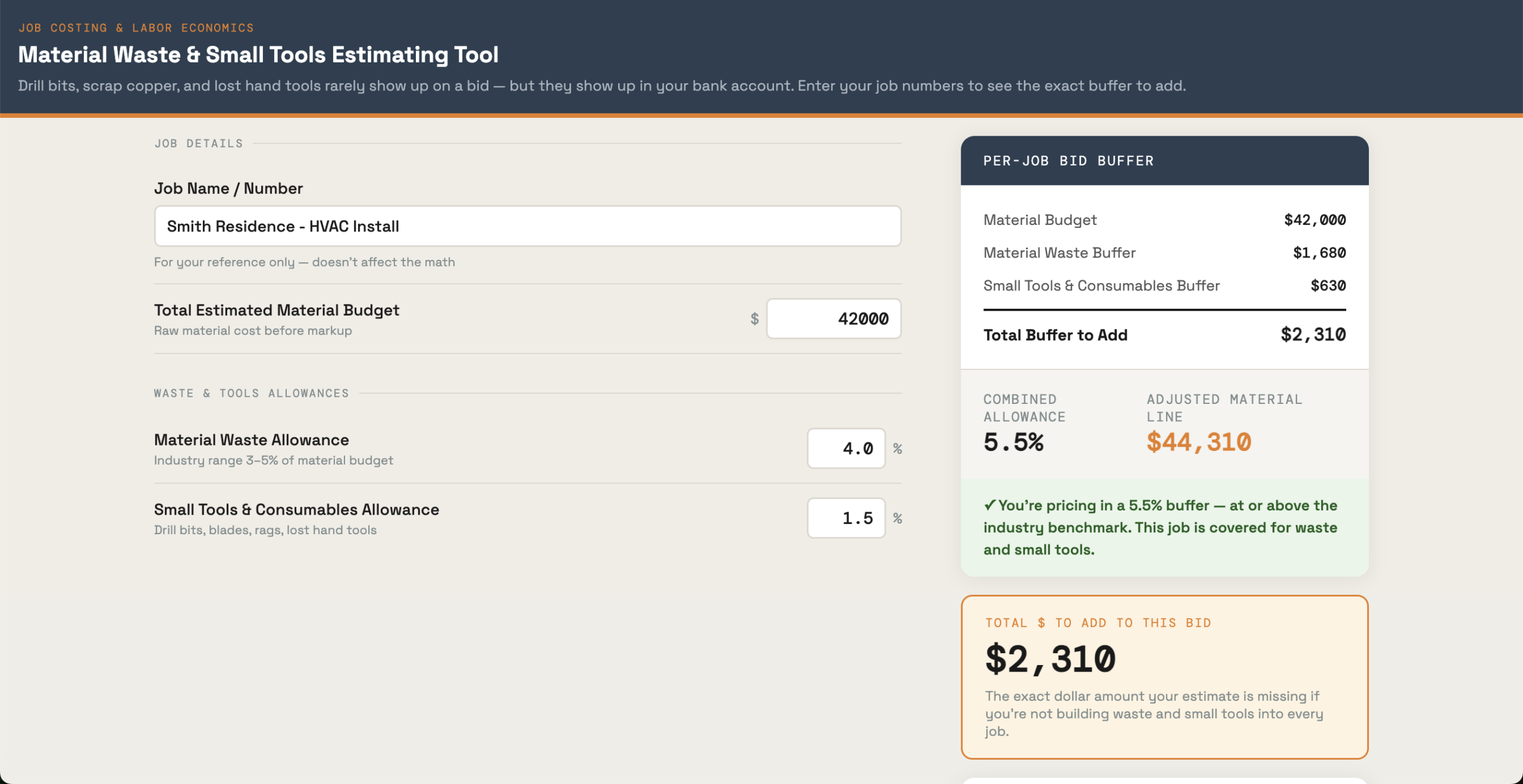

Estimators are usually meticulous about the big line items on a bid – the equipment, the fixtures, the primary material runs. But the small stuff almost always gets waved off as “general overhead.” Drill bits, saw blades, tape, glue, and scrap material feel too small to matter individually, so most trade businesses never tie them to a specific job. The problem is that bulk purchases still cost real cash, and when that cash isn’t tracked to a project, it silently erodes a margin that looks healthy on the estimate but doesn’t show up in the bank account.
Industry benchmarks put material waste at 3–5% of a project’s material budget, with small tools and consumables adding another 1–2%. For a $4M contractor spending roughly $1.6M a year on materials and field supplies, failing to allocate for both can mean nearly $90,000 a year in real project costs that are never recovered from clients. The fix is building a standardized indirect job cost allowance directly into every estimate – a fixed percentage buffer, tied to the specific trade, that ensures the client is paying for the true cost of doing the work instead of the business quietly absorbing it.